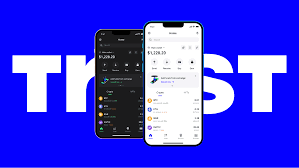
🔐 Trust Wallet —
Trust Wallet is one of the most widely used non-custodial crypto wallets, designed to give users full control over their digital assets without relying on banks, exchanges, or centralized platforms. Unlike custodial services that hold your private keys, Trust Wallet ensures you remain the sole owner of your cryptocurrency.
With a clean interface and support for millions of assets across multiple blockchains, Trust Wallet has become a key access point for Web3, DeFi, and NFTs.
🚀 What Makes Trust Wallet Unique?
Trust Wallet stands out because it is:
FeatureBenefitNon-custodialYou control your private keys and cryptoMulti-chain walletSupports 100+ blockchainsEasy for beginnersNo setup complicationsFull Web3 accessConnects to dApps and NFT marketplacesMobile-focusedDesigned for fast, secure on-the-go access
With Trust Wallet, your crypto is stored on the blockchain — not on a company's server. Your recovery phrase is the only backup of your wallet.
📲 How Trust Wallet Works
Trust Wallet provides three core functions:
🔹 Crypto storage
Store, receive, and send thousands of tokens, including:
Bitcoin (BTC)
Ethereum (ETH)
BNB Smart Chain
Polygon (MATIC)
Solana (SOL) and others
🔹 Web3 gateway
Connect seamlessly to decentralized applications, including:
DeFi platforms
NFT marketplaces
Metaverse games
Decentralized exchanges (DEXs)
🔹 Built-in swap & staking
Swap supported tokens directly within the wallet and earn staking rewards on select assets.
🔑 Recovery Phrase — The Most Important Part of Trust Wallet
When creating a wallet, users receive a 12-word recovery phrase (also known as a seed phrase).
This phrase rebuilds the wallet and gives full access to funds.
🛑 Never share your recovery phrase
Anyone who has it can take your crypto.
Your recovery phrase should only be stored offline — not:
In screenshots
In cloud storage
On messaging apps
On email or text files
Trust Wallet support will never ask for your seed phrase.
🛡 Security at a Glance
Because Trust Wallet is non-custodial:
| Who controls the wallet? | User |
| Who controls the private keys? | User |
| Can Trust Wallet recover a lost seed phrase? | No |
| Can Trust Wallet block transactions? | No |
This gives complete financial freedom — and complete responsibility.
🌐 Trust Wallet Token (TWT)
Trust Wallet is powered by its own token, TWT, which offers:
Governance influence
Discounts and incentives in the Trust Wallet ecosystem
Utility inside Web3 services and partnerships
TWT is optional — you don’t need it to use the wallet.
🧭 Who Is Trust Wallet For?
Trust Wallet is ideal for:
Beginners exploring crypto for the first time
NFT collectors and Web3 gamers
DeFi investors
Users who want full ownership of assets
People who value privacy and independence from banks/exchanges
Users who prefer hardware-level security can pair Trust Wallet with a hardware wallet for more layered protection.
🎯 Pros & Cons
ProsConsUser fully controls cryptoIf seed is lost, funds are unrecoverableSupports millions of assetsRequires self-responsibility and cautionBuilt-in staking and swapsMobile-only (desktop still limited)Fast Web3 dApp accessPossible phishing risks if connecting to unsafe dApps
🏁 Final Takeaway
Trust Wallet is a powerful self-custody wallet that gives users complete control over their digital assets and full access to the decentralized web. It supports nearly every major cryptocurrency, integrates directly with Web3, and prioritizes ownership and privacy.
But the ownership also comes with responsibility:
If you protect your recovery phrase properly, your crypto remains secure — without relying on any third party.